
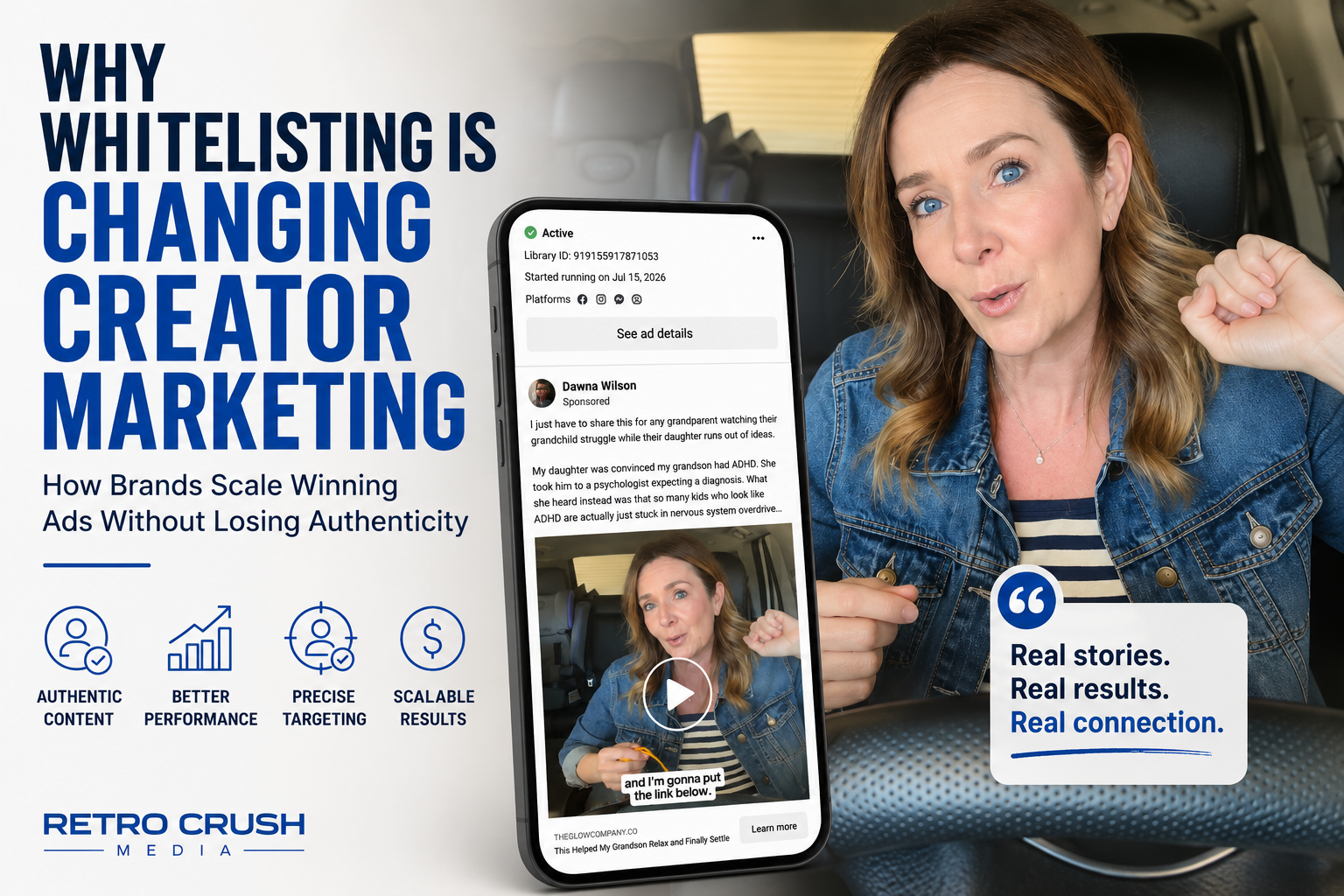
Why Whitelisting Is Changing Creator Marketing
How Brands Scale Winning Ads Without Losing Authenticity
This topic complements your portfolio, your repeat whitelisting work, and your positioning as a premium CGC creator. It also targets brands that are already spending money on Meta and TikTok ads.
Why Whitelisting Is Changing Creator Marketing
For years, brands viewed creator marketing primarily as a way to generate organic social media content. A creator would produce a video, post it to their audience, and the campaign would either perform well or quietly disappear into the endless stream of content competing for attention.
That approach has changed dramatically.
Today, many of the highest performing brands use creator content very differently. Instead of relying solely on organic reach, they obtain permission to run advertisements directly from the creator’s social media account. This strategy, known as whitelisting, has become one of the most effective ways to combine authentic creator content with sophisticated paid advertising.
As competition for consumer attention continues to increase, brands are discovering that creator whitelisting often outperforms traditional brand advertisements while providing greater flexibility for testing, scaling, and optimizing campaigns.
What Is Creator Whitelisting?
Whitelisting allows a brand to run paid advertisements through a creator’s social media profile rather than the company’s own business account.
To the viewer, the advertisement appears much more like native content than a traditional corporate advertisement. Instead of seeing a polished brand commercial, consumers encounter a recommendation or demonstration from a real person.
This subtle difference has become incredibly valuable because people naturally engage with authentic human content more readily than highly produced advertisements.
For brands, this creates the opportunity to combine the credibility of creator content with the precision targeting and scalability of paid advertising.
Why Consumers Respond Differently
Consumers have become exceptionally skilled at recognizing advertisements.
Traditional commercials often trigger immediate skepticism because viewers know they are being sold to. Creator content, however, feels more conversational and educational. When produced correctly, it resembles content that audiences already enjoy watching on platforms like TikTok, Instagram Reels, Facebook, and YouTube Shorts.
The goal is not to disguise advertising. Rather, it is to communicate in a format that today’s audiences already trust and consume naturally.
People don’t object to marketing. They object to marketing that feels disconnected from real life.
Why an Established Creator Profile Matters
One aspect of creator partnerships that is often overlooked is the value of an established social media presence. While follower count isn’t the determining factor in successful whitelisting campaigns, brands often prefer working with creators who have maintained authentic, active accounts over many years.
A long standing profile helps reinforce credibility. When someone clicks through a partnership ad and visits the creator’s profile, they aren’t met with an account that appeared overnight for advertising purposes. Instead, they see a genuine person with years of consistent content, real interactions, and an authentic online presence.
That authenticity cannot be manufactured quickly. It develops over time through regular posting, genuine engagement, and a history that reflects an actual person rather than a temporary marketing asset. For brands investing in paid advertising, that additional layer of credibility often complements the creator’s content and strengthens consumer confidence.
While no campaign succeeds solely because an account is older, an established creator profile can provide an important trust signal that supports the authenticity partnership ads are designed to deliver. Meta itself emphasizes that partnership ads leverage the credibility creators have built with their audiences, making trust an important component of the strategy.
Better Data Leads to Better Advertising
One of the biggest advantages of whitelisting is that brands gain significantly more control over campaign performance.
Instead of publishing one video and hoping it performs well organically, marketers can test different audiences, headlines, hooks, calls to action, placements, and budgets while using the exact same creator asset.
If one variation performs exceptionally well, the budget can be increased almost immediately.
If another version underperforms, adjustments can be made without asking the creator to completely rebuild the campaign.
This ability to test and optimize continuously is one of the primary reasons performance marketers increasingly prefer creator generated advertising over traditional commercial production.
Why Professional Creators Matter
Not every creator produces content designed for paid advertising.
There is an important distinction between someone who creates entertaining social media posts and someone who understands conversion focused creative.
Performance advertising requires strong opening hooks, clear messaging, natural delivery, persuasive storytelling, and a clear understanding of how viewers make purchasing decisions.
Professional creators understand how to communicate product benefits without sounding scripted or overly promotional. They know how to create videos that feel genuine while still driving measurable business results.
That combination of authenticity and marketing strategy is what separates creator generated content from casual user generated content.
Long Term Partnerships Produce Better Results
The most successful whitelisting campaigns rarely consist of a single video.
Brands that consistently generate strong advertising results typically work with the same creators over extended periods of time.
As creators become familiar with the brand, they better understand the products, messaging, customer objections, and target audience. Every new campaign builds on what has already been learned through previous testing.
Rather than constantly searching for new creators, brands often achieve greater consistency by building long term creative partnerships.
These ongoing relationships also allow advertisers to refresh campaigns more efficiently without completely reinventing their creative strategy every few weeks.
Whitelisting Is More Than Running Ads
Many people assume whitelisting simply means giving a brand permission to advertise through a creator’s account.
In reality, successful whitelisting involves collaboration.
The strongest campaigns are built around testing multiple hooks, different messaging angles, alternative calls to action, and ongoing creative optimization. Performance data guides future content decisions, allowing each round of production to become more effective than the last.
This creates an environment where the creator and the brand work toward the same objective: improving campaign performance through continuous refinement.
The Future of Creator Marketing
As advertising costs continue to rise across every major platform, brands are looking for creative that earns attention instead of interrupting it.
Whitelisting has become one of the most effective ways to achieve that goal.
Rather than choosing between authentic creator content and scalable paid advertising, brands can leverage both simultaneously. The result is advertising that feels more natural to consumers while giving marketers the tools they need to optimize campaigns based on real performance data.
For businesses investing in digital advertising, creator whitelisting is no longer an experimental strategy. It has become an important part of modern performance marketing.
Brands that embrace authentic creator partnerships today will be better positioned to build trust, improve conversions, and maximize advertising performance well into the future.